
Pre or Post Facelift R50 Nissan Pathfinder: Which Should You Get?
Author
Logan Kuzyk
Date Published

Power or reliability? Lots of features or just the basics? If you’re in the market for an R50 Nissan Pathfinder (1996–2004), these are the questions you need to ask yourself. Regardless, the R50 Nissan Pathfinder is one of the best-value off-roaders out there. They’re cheaper than Toyota 4Runners but perform just as well in most scenarios.
The R50 generation is split into two camps—pre-facelift (1996–2000) and post-facelift (2001–2004). As usual, Nissan decided to switch things up a bit with a mid-generation refresh, complete with a new engine, minor styling tweaks, and features that might matter to you (or not). Here's everything you need to know if you're deciding between the two.
The Engines: 3.3L VG33 vs. 3.5L VQ35DE
Your vehicle's engine is one of the most important parts, and it's the main thing that differs between R50 Pathfinders. The pre-facelift models come with the 3.3L VG33E engine, a no-frills, overbuilt V6 that's all about reliability—but not power. Even in the 90s when so many Nissans were still being made with these engines, the initial design was already over 10 years old.
VG33E (1996–2000):
168 horsepower @ 4,800 rpm
196 lb-ft torque @ 2,800 rpm
Then there’s the post-facelift option, the 3.5L VQ35DE, which you can even find in cars like the 350Z. This engine is a major upgrade in terms of power and torque, which is really noticeable in the Pathfinder with how heavy it is.
VQ35DE (2001–2004):
240 horsepower (250 if you find the unicorn manual version)
265 lb-ft torque @ 3,200 rpm
In between the pre and post-facelift versions, there was the 1999.5 model year. These are the R50 Pathfinders sold under the 2000 model year which Nissan gave the updated exterior but stuck with the old VG33E engine and drivetrain. Depending on your tastes, this could either be the best or the worst of both worlds.
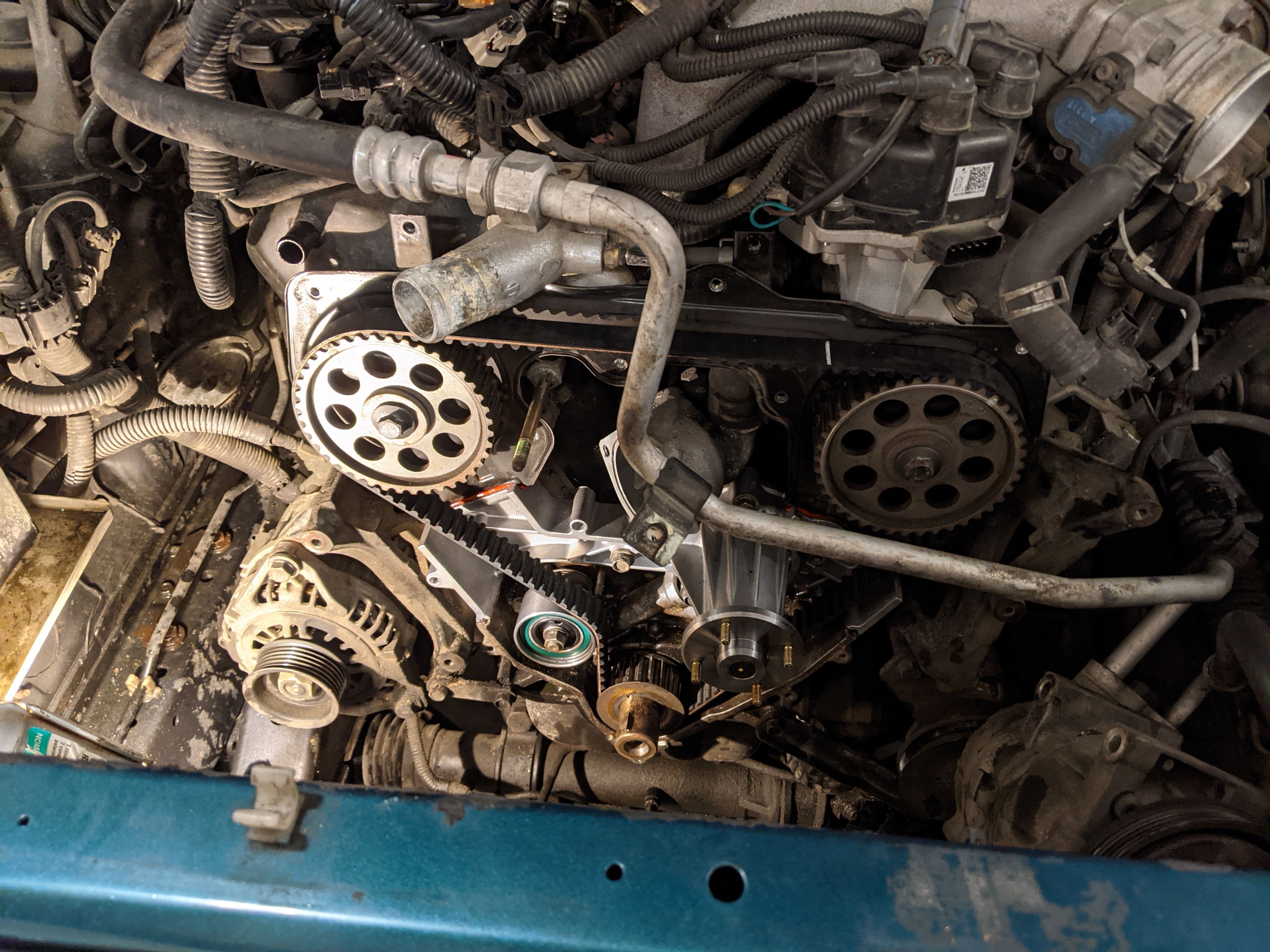
My Pathfinder's VG33E just after I put the new timing belt and water pump on.
Reliability vs. Power: What Matters to You?
The VG33 is simpler, more reliable, and easier to maintain. It’s the kind of engine you can rely on for years, provided you remember to change the timing belt - one of the main drawbacks of this engine is its interference design. This means that if your timing belt snaps while driving, your pistons and valves will destroy each other. There's nothing wrong with the timing belt design, it's just that you need to make sure to replace it as per the maintenance schedule.
The VQ35, while more powerful, was brand new when they started using it in the Pathfinder, so naturally it's a bit more issue-prone than the VG33. Variable valve timing, for example, is genuinely a great feature but it is also another thing which can go wrong. If you're looking for one of the most basic V6s of the OBD2 era, Stick with the VG33. Need more power for towing, bigger tires, or heavy mods? The VQ35 is definitely better for that.
Transmissions and Drivetrains
Both generations offer a 4-speed automatic and a 5-speed manual. The older Pathfinders, especially base models, are easier to find with manual transmissions (like mine) but overall most Pathfinders are automatic from what I've seen. The newer the Pathfinder, the rarer it is to find it with a manual. Post-facelift models introduced an electronic transfer case with an auto mode—it can be great but dealing with issues is definitely going to be harder than with the older mechanical version. Both the mechanical and electronic transfer case allow on the fly switching between 2HI and 4HI!
For differentials, you’ll occasionally find limited-slip differentials (LSDs) on higher trims. They’re not known to be very strong, but you can always rebuild them or add extra clutch plates to make them more grabby.
Styling and Features
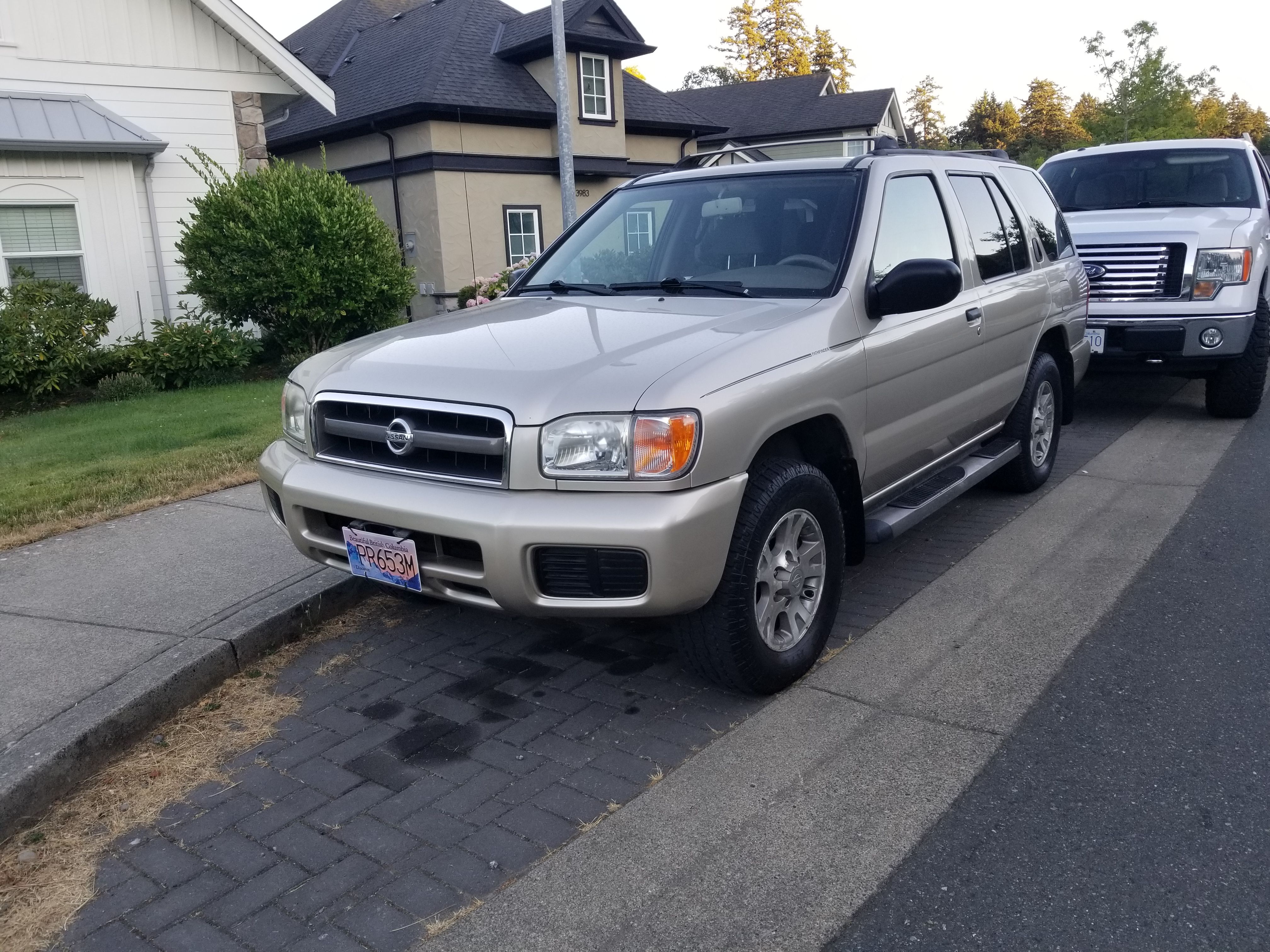
The post-facelift Pathfinders look chunkier and more modern, while the pre-facelift models stick to the classic ’90s truck aesthetic. One nice thing about the pre-facelift models is that they have glass headlights that won’t haze over.
Inside, the differences are minor:
- Slightly bigger cupholders
- Folding armrests in the back seats
- A steering wheel with an actual Nissan badge
Overall, they're similar enough that the condition is going to make a bigger difference than the model year when it comes to appearance. Post-facelift models tend to have more features, but that also increases risk of things breaking.
Aftermarket Support
The R50 doesn’t get the attention that 4Runners or even Xterras do in the aftermarket world. But there’s still enough to turn it into a capable off-roader. For things like bumpers, there are only a handful of options, and what's available is different between the two versions of the R50.
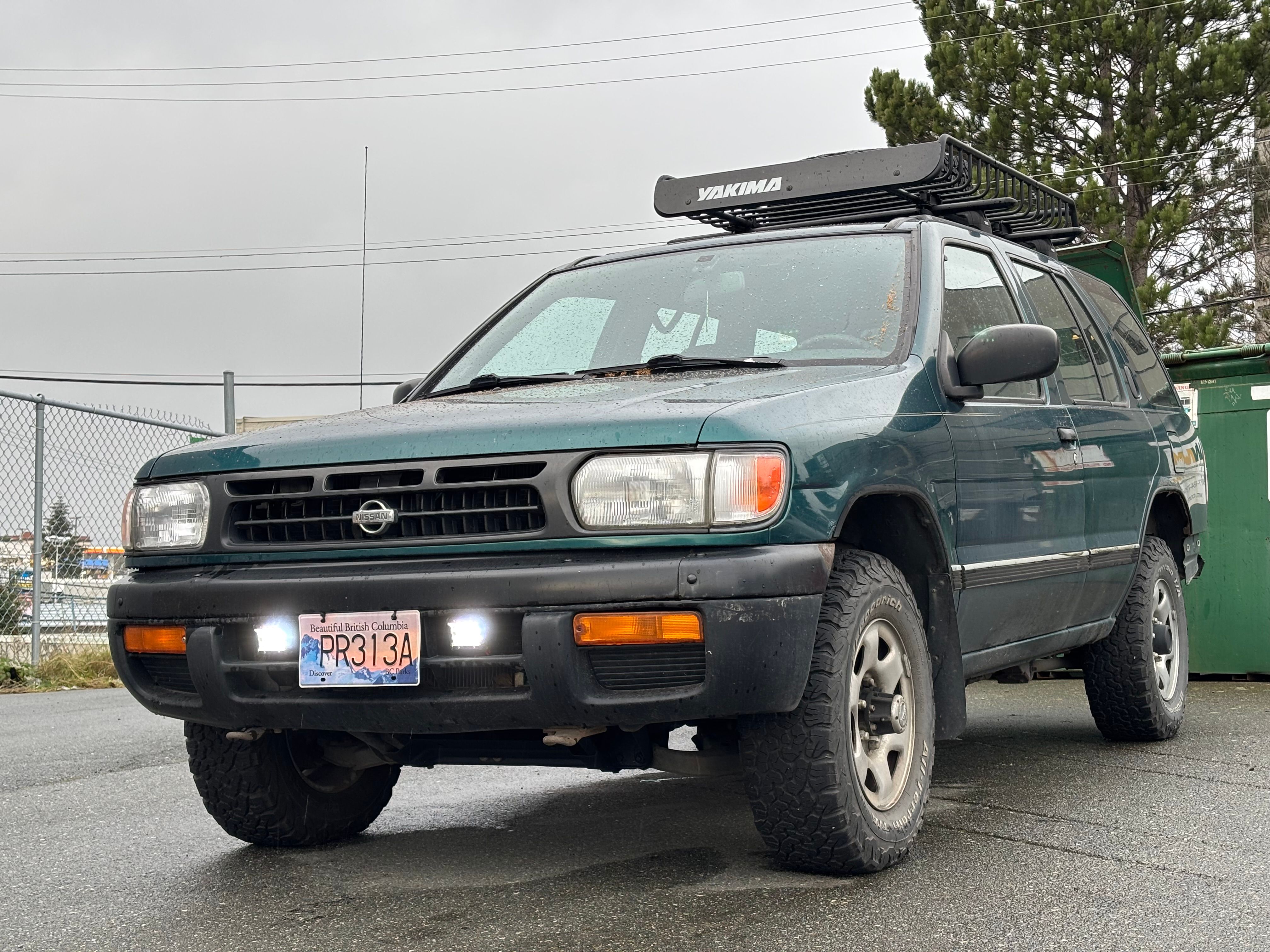
My Pathfinder with the two light pods on.
The Bottom Line: Which One Should You Get?
Get a pre-facelift Pathfinder if you value reliability, simplicity, and low maintenance costs. It’s the perfect option for a budget build especially if you're planning on keeping the drivetrain and tires close to stock specs.
Get a post-facelift Pathfinder if you need more power for towing, big tires, or heavy mods—or if you just like having more bells and whistles, especially in the interior.
Either way, you really can't go wrong between the two.
Final Thoughts
The R50 Pathfinder is a great 4x4 that doesn't get as much attention as it deserves. It’s not as famous as the 4Runner, but it’ll get the job done for a much better price.

Upgrade your off-road vehicle with inexpensive LED light pods! A guide to choosing, wiring, and installing them.